


View: 


Categories
- Active Record
- Active Resource
- Active Support
- Administration
- Ajax
- APIs
- Authentication
- Authorization
- Background Jobs
- Caching
- Code Walkthrough
- Controllers
- Debugging
- Deployment
- eCommerce
- Forms
- Mailing
- Models
- Performance
- Plugins
- Production
- Rack
- Rails 2.0
- Rails 2.1
- Rails 2.2
- Rails 2.3
- Rails 3.0
- Rails 3.1
- Rails 3.2
- Rails 4.0
- Refactoring
- Routing
- Search
- Security
- Testing
- Tools
- Views
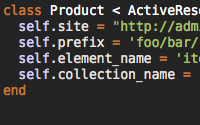
More on ActiveResource
See how to handle authentication and custom actions using ActiveResource in this episode.
(8 minutes)
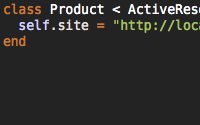
ActiveResource Basics
ActiveResource allows you to easily communicate between multiple Rails applications. See how in this episode.
(7 minutes)
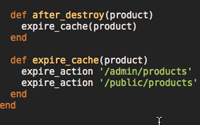
Action Caching
Action caching behaves much like page caching except it processes the controller filters. You can also make it conditional as seen in this episode.
(7 minutes)
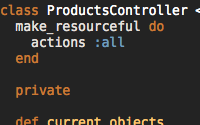
make_resourceful
The make_resourceful plugin is a great way to DRY up the 7 RESTful actions common in most controllers. Learn how to use it in this episode.
(6 minutes)
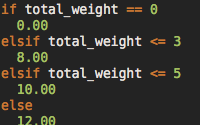
Refactoring Long Methods
In this episode I walk you through an exercise in refactoring by taking a long method and making it more concise.
(7 minutes)
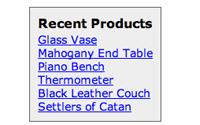
Fragment Caching
Sometimes you only want to cache a section of a page instead of the entire page. Fragment caching is the answer as shown in this episode.
(6 minutes)
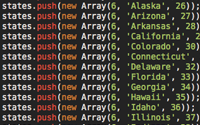
Page Caching
Page caching is an efficient way to cache stateless content. In this episode I will show you how to cache the dynamic javascript we created last week.
(6 minutes)
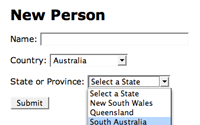
Dynamic Select Menus
See how to dynamically change a select menu based on another select menu using Javascript. In this episode everything is kept client side which leads to a more responsive user interface.
(7 minutes)
Generating RSS Feeds
See how to easily generate and link to an RSS feed using new features in Rails 2.0. Watch this episode or details.
(6 minutes)
Logging Variables
Have you ever wanted to easily log all variables? Now you can by using some advanced Ruby concepts as shown in this episode.
(6 minutes)